Nuclear winter
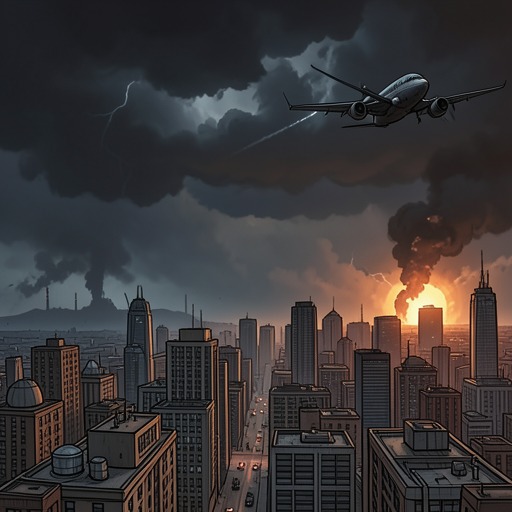
Batman the Dark Knight Returns 10th Anniversary Edition HardcoverNuclear winter is the post-detonation condition that follows the nuclear exchange surrounding Gotham City’s wider crisis. It is not merely a change in weather but a prolonged state of darkness, cold, scarcity, and institutional breakdown. By placing the struggles of Bruce Wayne / Batman and Gotham City against this aftermath, the narrative expands a local crime story into a meditation on deterrence, political failure, and the costs imposed on civilians by decisions made at a distance.
Definition and Background
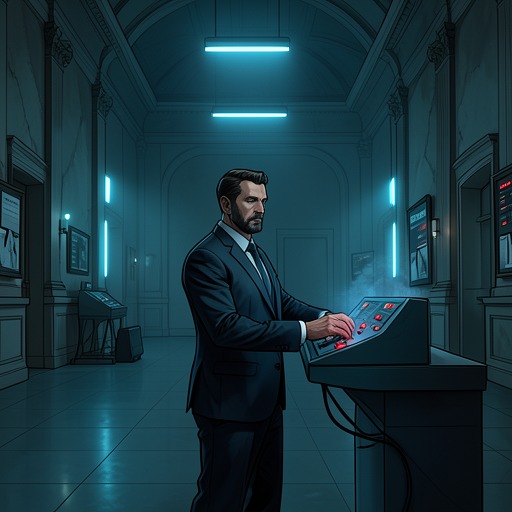
Nuclear winter emerges from the escalation of an international crisis in which military capability, perceived threat, and the fear of retaliation become inseparable. The conflict involving Corto Maltese is presented within the same geopolitical atmosphere, linking apparently defensive actions to a wider chain of confrontation. The danger lies not only in the weapons themselves but in the uncertainty surrounding intent: one side’s attempt to demonstrate strength can be interpreted as preparation for attack, making further escalation appear necessary.
The state therefore functions as the environmental consequence of a security dilemma. Nuclear weapons promise protection through deterrence, yet their use produces a condition in which protection becomes meaningless. The resulting winter is the delayed and distributed violence of the conflict: unlike a single explosion, it continues after the initial decision, affecting people who had no role in making it and whose suffering cannot be contained within the battlefield.
Environmental and Social Conditions
The nuclear aftermath alters the physical setting in which the later story unfolds. Darkness and cold become signs of a damaged world, while the normal rhythms of public life are interrupted by scarcity and insecurity. The crisis is experienced collectively rather than by one combatant alone, and its consequences reach Gotham City as both an environmental emergency and a political vacuum.
This condition gives the city’s social decay a new scale. Gotham City is already marked by violence, disorder, and weakened public authority, but nuclear winter makes those problems part of a larger collapse. The ordinary distinctions between crime, war, disaster, and governance become unstable: survival requires organization, while the institutions expected to provide it are increasingly unable to do so.
Political Consequences
The nuclear aftermath intensifies the struggle over who can impose order. Emergency conditions make extraordinary authority appear necessary, while the suspension or failure of ordinary institutions leaves space for coercive actors. In this environment, martial law in Gotham City and the pursuit of Bruce Wayne / Batman cannot be understood separately from the broader atmosphere of fear. Public power is tested by a crisis that exceeds normal procedures, and private power gains legitimacy from its ability to act when official systems falter.
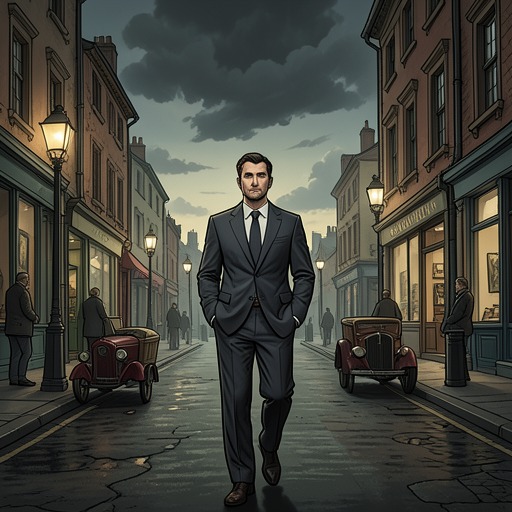
The state also exposes the contradiction within Bruce Wayne / Batman’s return. His methods are unauthorized and potentially destabilizing, yet the breakdown surrounding him makes direct intervention seem effective. The narrative does not erase that contradiction; instead, nuclear winter sharpens it. A society frightened by annihilation may welcome forceful order, even when that order rests on personal command rather than accountable government.
Relation to Bruce Wayne / Batman’s Conflict
The winter forms the background against which Bruce Wayne / Batman’s later confrontations acquire their urgency. His conflict with Clark Kent / Superman is not isolated from the nuclear age. Their opposing conceptions of power resemble the larger logic of deterrence: each possesses overwhelming capacity, each reads the other as a possible threat, and each treats preparation as a form of defense. The global crisis makes their eventual confrontation feel like a miniature version of the international standoff that produced the winter.
At the same time, the aftermath changes the meaning of victory. Physical dominance cannot restore the world that nuclear escalation has damaged. Bruce Wayne / Batman’s response is instead directed toward rebuilding collective agency, organizing people, and creating a structure capable of surviving beyond a single heroic body. The nuclear winter thus helps move the story from individual combat toward questions of social continuity and political succession.
Narrative and Thematic Significance
Nuclear winter is the clearest expression of the book’s distrust of technological power detached from responsibility. Nuclear weapons, military systems, and state decisions operate across distances, but their external costs are borne by exposed populations and fragile cities. The winter makes that imbalance visible by turning geopolitical calculation into an atmosphere in which everyone must live.
Its significance is also temporal. The initial act of escalation is brief, while its consequences persist, accumulate, and reshape later choices. The condition therefore links the book’s political drama to a form of slow violence: catastrophe is not exhausted by the moment of detonation but continues through cold, darkness, scarcity, fear, and the normalization of emergency. Against that background, the return of Bruce Wayne / Batman becomes both a response to collapse and a warning about the kinds of authority that collapse can invite.